ClassificationsAncient Egyptian Art
Mummy Mask
Place CreatedEgypt, Africa
CultureEgyptian
PeriodRoman Period
Date1st - 2nd century CE
Credit LineGift of Joseph A. Lewis II and Sofi Lewis
Dimensions14 15/16 x 8 1/4 in. (38 x 21 cm)
Object number2013.043.008
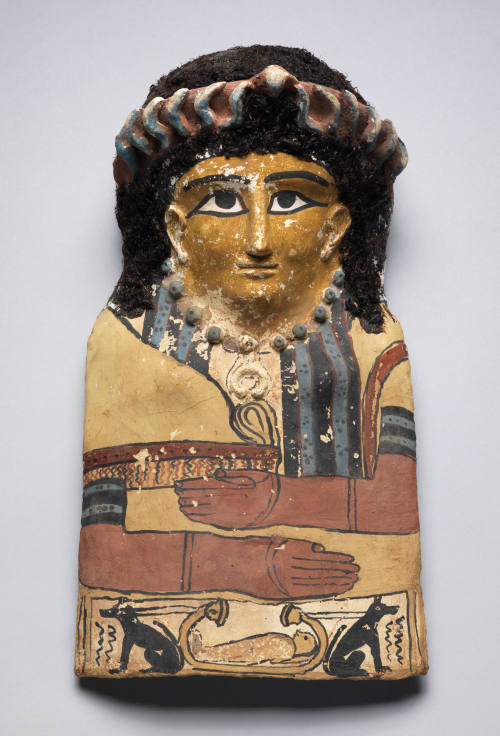
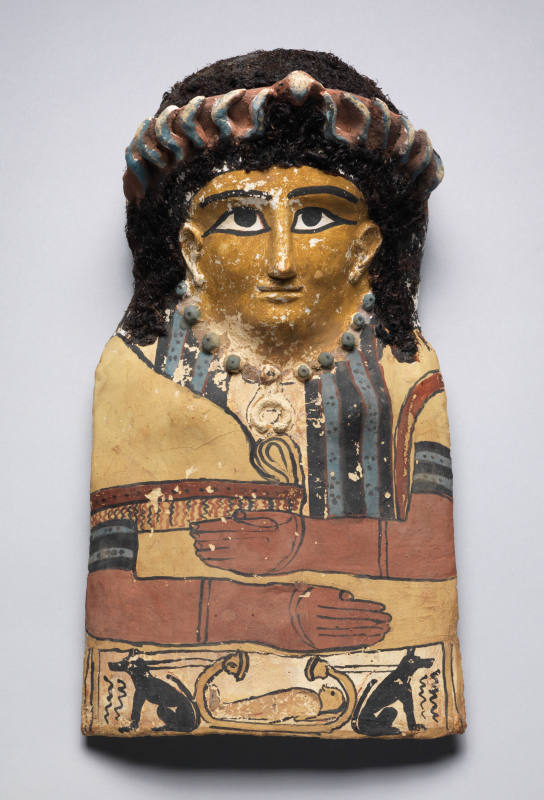
Label TextThis mask is made from molded cartonnage with plaster elements. While it has much in common with earlier mummy masks, this Roman period example reflects a growing interest in incorporating contemporary fashions and naturalistic details. Most striking is the realistic "hair" made from black-dyed plant fibers. Loose hair was associated with beauty, fertility, and goddesses such as Isis and Hathor. A crown of two converging uraeus serpents, painted pink and blue, serves as a traditional Egyptian protective symbol. The face is idealized rather than a portrait of a specific individual. It is painted yellow to imitate gold, a material associated with divinity in Egyptian belief, while the arms are painted with a natural skin tone.The figure wears a tunic and fringed shawl typical of Roman period Egypt. The tunic's blue, black, and red stripes imitate embroidered cloth. The edge of the shawl is tied into an Isis knot. A necklace of blue beads, probably meant to represent faience, hangs around the neck. At its center is a crescent-shaped amulet called a lunula, a type of ornament worn by girls and unmarried women in Roman society, which was once painted yellow to imitate gold. Molded plaster breasts emphasize femininity, fertility, and rebirth.
At the bottom of the mask is a framed scene showing the deceased's mummy resting on a boat. Seated jackals on either side likely represent the gods Anubis and Wepwawet, who guided and protected the deceased’s transition to the afterlife.
Exhibition HistoryMuseum of Fine Arts, Boston, Boston, Massachusetts, 2007-2013
Divine Felines: Cats of Ancient Egypt, Michael C. Carlos Museum, February 10 - November 11, 2018
Published ReferencesAsja Müller, Ägyptens schöne Gesichter : die Mumienmasken der römischen Kaiserzeit und ihre Funktion im Totenritual (Wiesbaden: Reichert Verlag, 2021), 334.
Carlo Rindi Nuzzolo, The Excavations at Ismant Al-Kharab in Dakhleh Oasis, Egypt. Volume I, Roman Period Cartonnage from the Kellis 1 Cemetery (Oxford: Oxbow Books, 2023), 180, figure 5.12.
ProvenanceWith Archea Ancient Art, Amsterdam, Netherlands, acquired from Swiss art market. Ex coll. Harer Family Trust, San Bernardino, California, purchased from Archea Ancient Art, 1997. On loan to Museum of Fine Arts, Boston (L-R 317.1997), Boston, Massachusetts, 2007 - 2013. Ex coll. Joseph and Sofi Lewis, United States, purchased from Harer Family Trust, 2007.
Status
Not on viewCollections
- Ancient Egyptian, Nubian, and Near Eastern Art
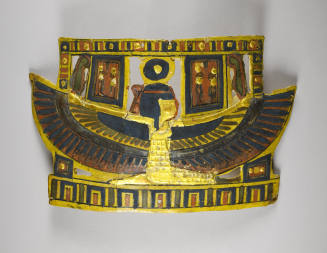
305-30 BCE
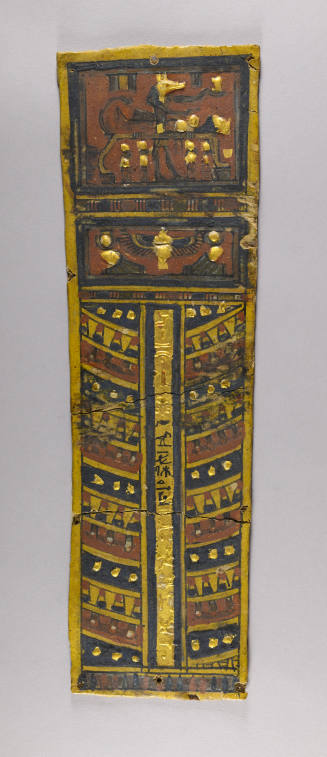
305-30 BCE
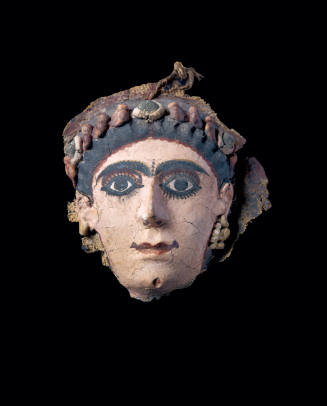
ca. 200-250 CE
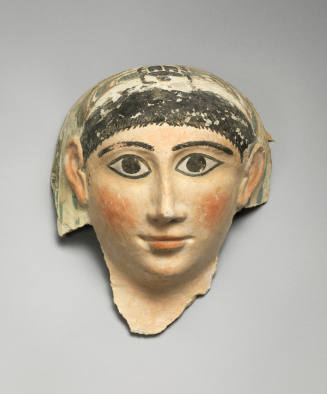
ca. 98 - 120 CE
305-30 BCE
943-655 BCE
282-246 BCE
1539-1479 BCE
167-30 BCE
722-332 BCE
early 1st Century CE
1st Century BCE-1st Century CE