ClassificationsAncient Egyptian Art
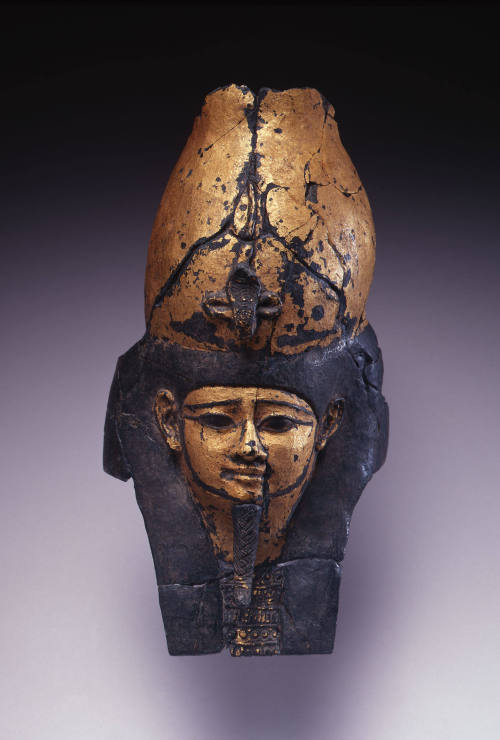
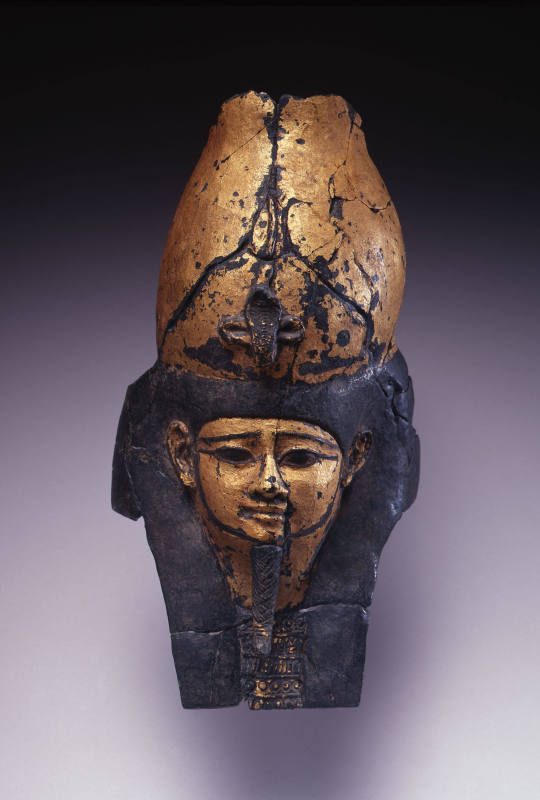
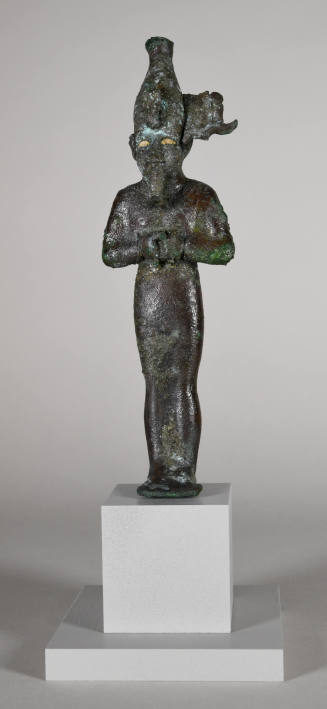
Corn Osiris Mask
Place CreatedEgypt, Africa
CultureEgyptian
PeriodLate Period
Date722-332 BCE
Credit LineEx Brummer Collection, donated by the Brummer-Laszlo Family
Dimensions8 7/8 x 4 5/16 x 2 3/4" (22.5 x 11 x 7 cm)
Object number1998.013.009 A/C
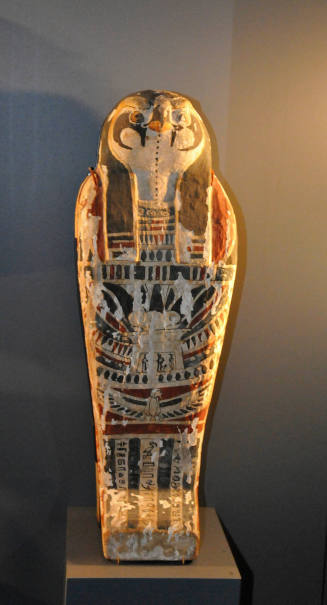
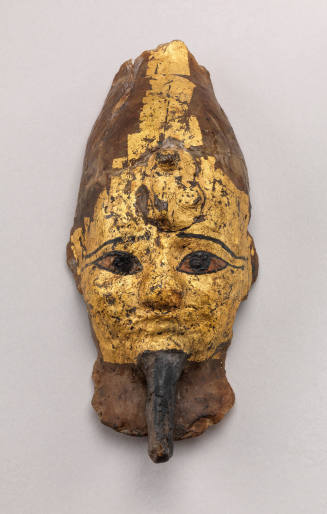
Label TextOn special feast days, figurines of the god Osiris, would be filled with mud and grain that would sprout, emphasizing the role of Osiris in bringing forth life from the earth. These evolved into a modeled figure known as a "corn Osiris." Such figures were sometimes fitted with wax masks with the face of Osiris. The wax itself was thought to have magical properties of transformation, and the gold symbolized the god's flesh. The hair on this example is colored with Egyptian blue to imitate lapis lazuli, the hair of the gods. These figures were placed in falcon-headed coffins and buried as votive offerings on feast days in cemeteries and sacred sites.Exhibition HistoryMCCM Permanent Collection Reinstallation, October 6, 2001 - Present
Published ReferencesPeter Lacovara, "The New Galleries of Egyptian and Near Eastern Art at the Michael C. Carlos Museum," Minerva 12 (2001), 9-16.
Peter Lacovara and Betsy Teasley Trope, The Realm of Osiris (Atlanta: Michael C. Carlos Museum, 2001), 17.
Terms
ProvenanceEx coll. Ernest Brummer (1891-1964), New York, New York, from at least 1964. Ex coll. Ella Brummer (1900-1999), New York, New York.
Status
On viewCollections
- Ancient Egyptian, Nubian, and Near Eastern Art
722-30 BCE
664-525 BCE
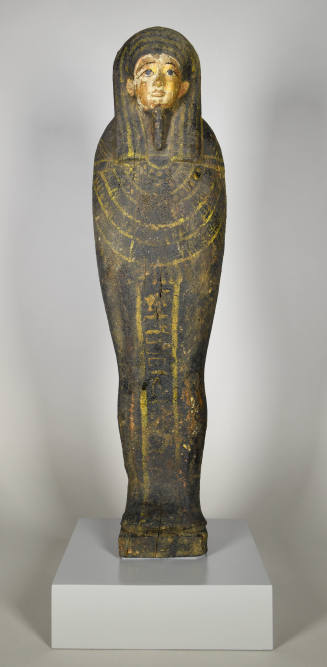
722-332 BCE
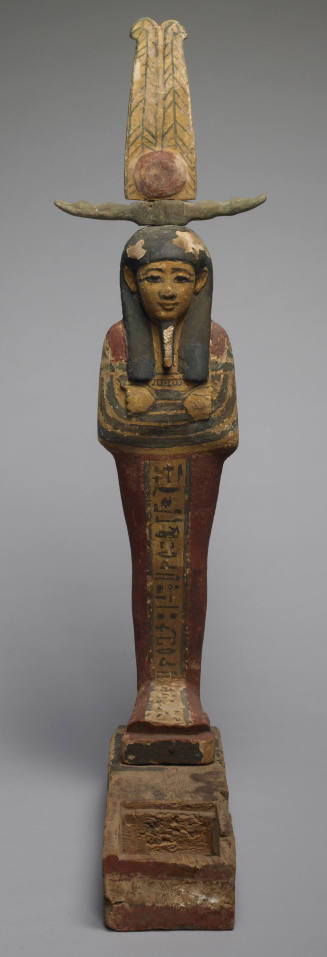
722-30 BCE
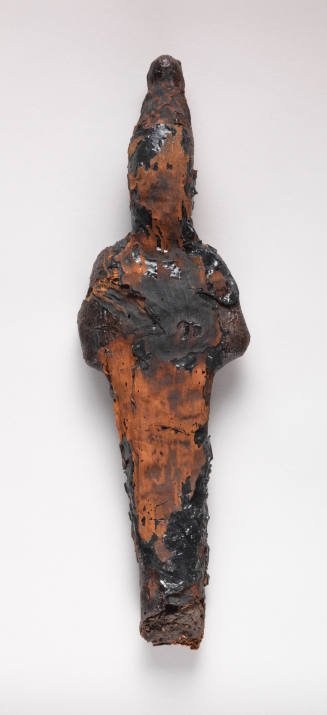
664-525 BCE
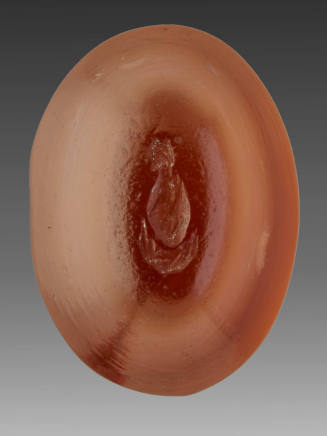
mid 1st-2nd Century CE
1st Century BCE-1st Century CE
1st Century CE
722-332 BCE
1076-944 BCE
282-246 BCE
late 1st-2nd Century CE