ClassificationsAncient Egyptian Art
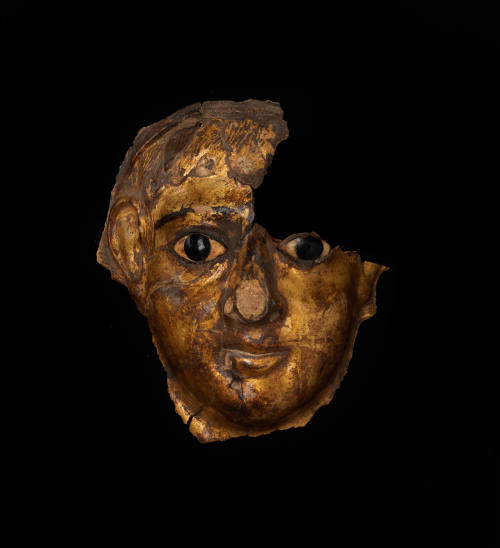
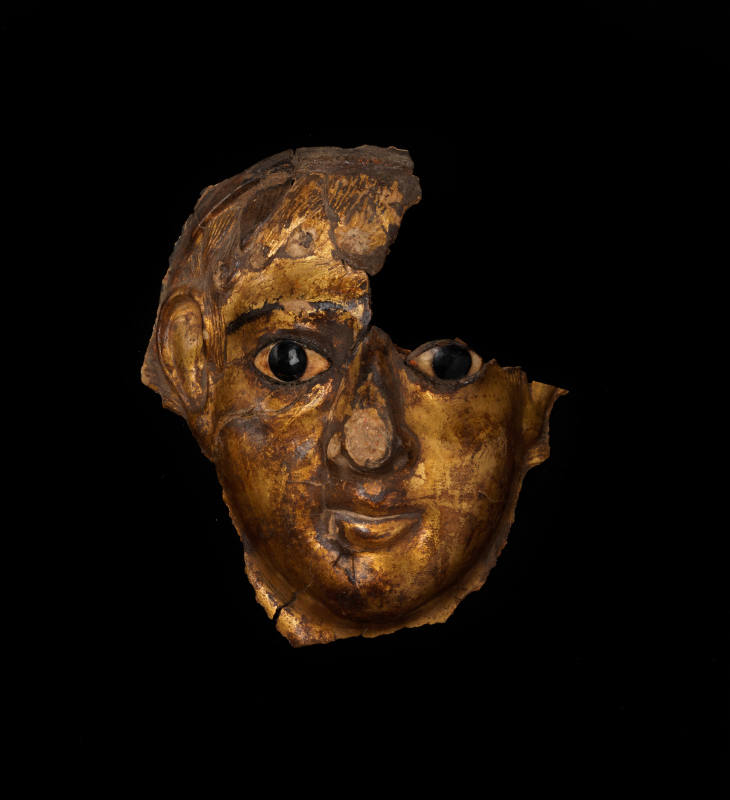
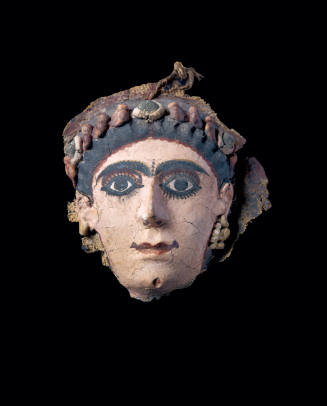
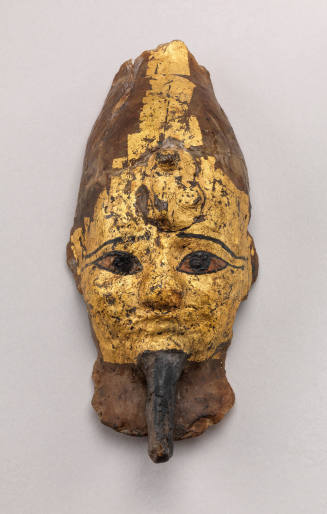
Mummy Mask of a Boy
Place CreatedHawara, Egypt, Africa
CultureEgyptian
Date1st Century BCE-1st Century CE
Credit LineGift of the Georges Ricard Foundation
Dimensions5 1/16 x 4 1/2 x 2 5/16 in., 144 g (12.8 x 11.5 x 5.8 cm, 5 1/16 oz.)
Object number2018.010.516
Label TextThis mummy mask is constructed from layers of cartonnage, a material made from linen and glue, covered with a thick layer of plaster shaped by hand into a lifelike face. The mask’s small size suggests it was made for a young boy. He has chubby cheeks and a small mouth with brows and eyelids outlined with black pigment resembling kohl, a cosmetic worn by men and women alike in ancient Egypt. The short, tousled hairstyle resembles fashions of the early Julio-Claudian period (ca. 30 BCE–41 CE), helping date the mask to the early Roman Empire. The mask’s gilded surface follows the long Egyptian tradition of showing the dead with golden skin to mark their divine status.Among the mask's most striking features are its inlaid eyes. Similar eyes appear in Greek and Roman sculpture. They were created from stone and glass: cloudy quartz crystal for the white of the eye and black glass or obsidian for the iris and pupils. Thin sheets of copper, cut to resemble eyelashes, made the eyes appear even more realistic. The shiny surfaces could catch sunlight or flickering lamplight, giving the mask a sense of lifelike animation.
Comparing this mask with other Roman period mummy portraits suggests that it came from Hawara in the Fayum Oasis. Hawara was an important burial site because of its association with the pharaoh Amenemhat III (1818-1773 BCE) and the crocodile god Sobek. Mummy masks from this site often mix Egyptian religious symbolism with Roman portrait styles, reflecting the blended cultural world in which they were created.
Exhibition HistoryLife and the Afterlife: Ancient Egyptian Art from the Senusret Collection, Michael C. Carlos Museum, February 4 - August 6, 2023
MCCM Permanent Collection Galleries, February 19, 2024 - Present
Published ReferencesHotel des Ventes du Prado, Marseille, Collection d'un Amateur: Archeologie - Objets de Fouilles (2 Decembre 1972), lot 178.
Melinda K. Hartwig, ed., Life and The Afterlife: Ancient Egyptian Art from the Senusret Collection (Atlanta: Michael C. Carlos Museum, 2023), catalogue entry 74.
ProvenanceEx private collection. Purchased by Georges Ricard (1921-2012) from Hotel des Ventes du Prado, Marseille, France, December 2, 1972, lot 178. Ex coll. Musée de l'Égypte et le Monde Antique, Collection Sanousrit, Monaco, 1975-1982. Ex coll. Georges Ricard Foundation, Santa Barbara, California.
Status
On viewCollections
- Ancient Egyptian, Nubian, and Near Eastern Art
ca. 98 - 120 CE
ca. 200-250 CE
1st - 2nd century CE
305-30 BCE
722-30 BCE
305-30 BCE
305-30 BCE
19th Century
late 19th-early 20th Century
19th-20th Century
664-525 BCE