ClassificationsAfrican Art
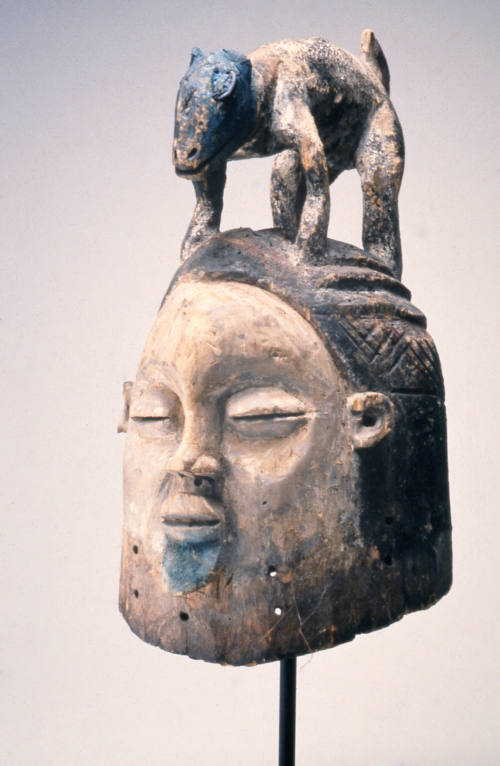
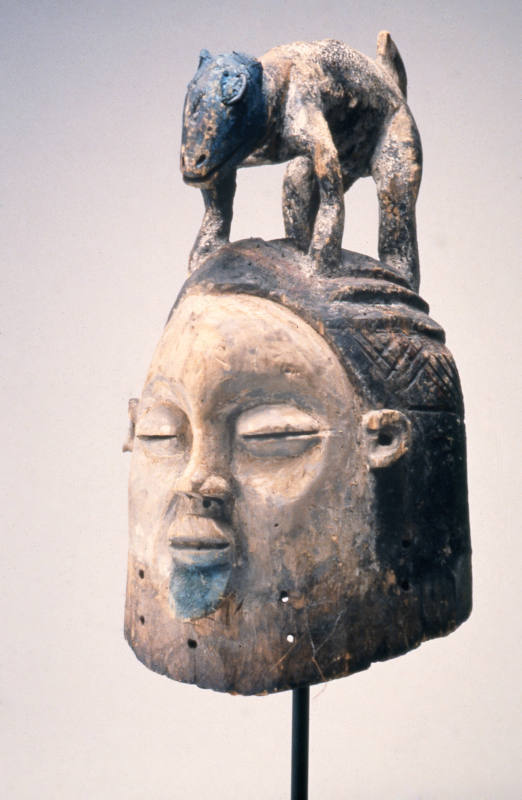
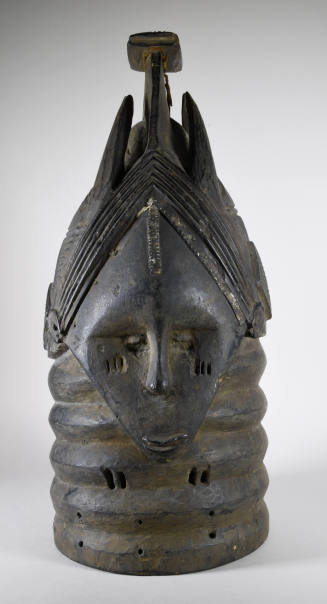
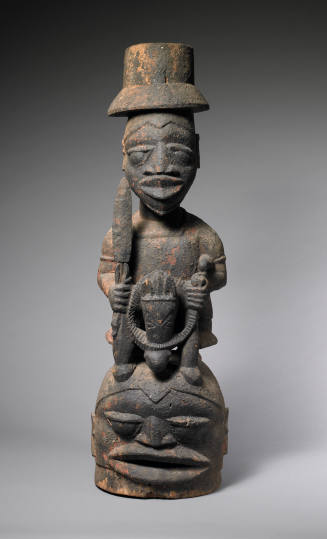
Helmet Mask, Hemba
Place CreatedDemocratic Republic of the Congo, Africa
CultureSouthern Suku/Eastern Yaka
Date20th Century
MediumWood, metal, pigment
Credit LineEx coll. William S. Arnett
Dimensions16 7/8 x 7 7/8 x 14 9/16 in. (42.8 x 20 x 37 cm)
Object number1994.004.081
Label TextIn the southern regions of the Democratic Republic of Congo, northern Zambia and throughout Angola, masks are often present at mukanda, a pan-ethnic term for the initiation schools where boys undergo rites of passage into young adulthood. Central to mukanda are ancestral spirits (mukishi) who come to life through masks in order to entertain and instruct initiates. White-faced, bell-shaped helmet masks called hemba, presented as part of a male and female pair, perform to ensure the initiate's future success in hunting. This hemba mask exhibits female attributes (the heavy crescent-shaped eyelids and small oval mouth revealing no teeth). Animals commonly carved on top of hemba include birds, antelope, and monkeys, although this example seems more canine.Exhibition HistoryMCCM Permanent Collection Installation, Rotation 3, September 26, 1998 - Spring 2003
MCCM Permanent Collection Installation, July 19, 2003 - March 13, 2007
ProvenanceEx coll. William S. Arnett (1939-2020), Atlanta, Georgia.
Status
Not on viewCollections
- African Art
late 19th Century
late 19th-20th Century
late 19th-early 20th Century
early 19th Century
late 19th-mid 20th Century
1st Century BCE-1st Century CE
mid 20th Century
20th Century
late 19th-late 20th Century
20th Century
ca. 98 - 120 CE