ClassificationsAfrican Art
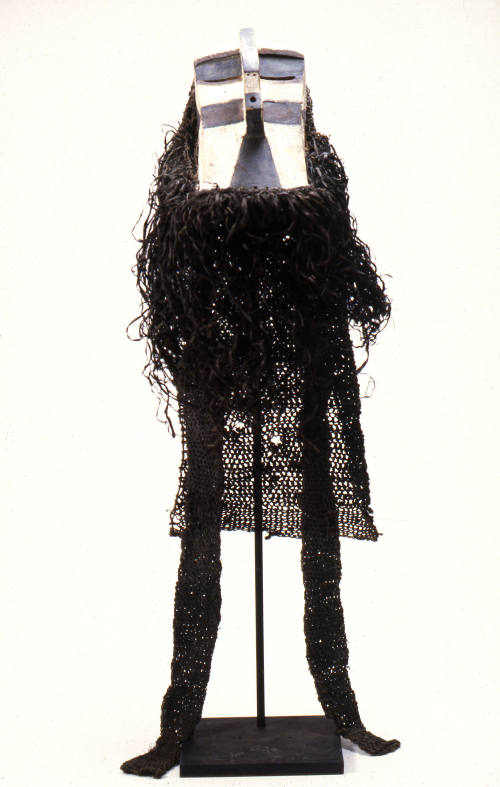
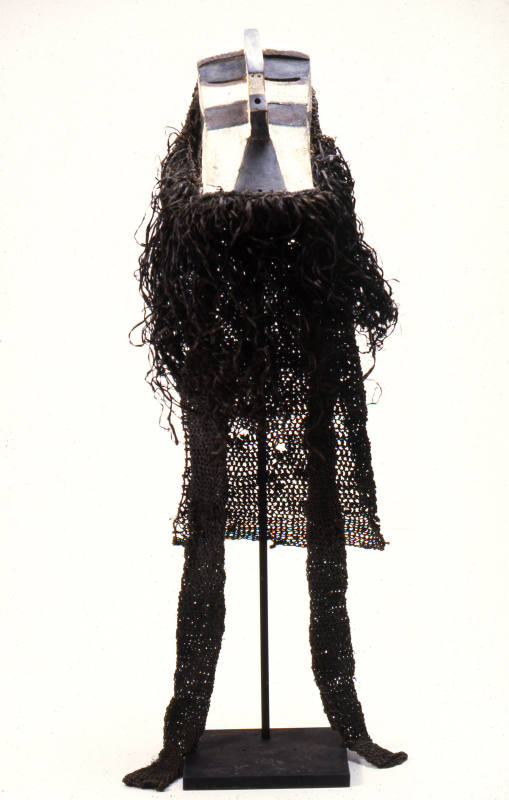
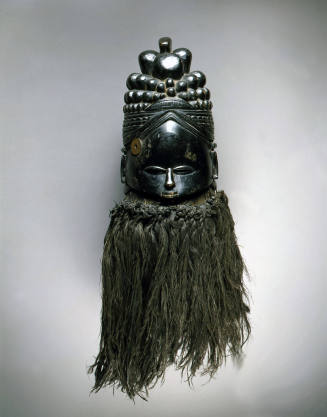
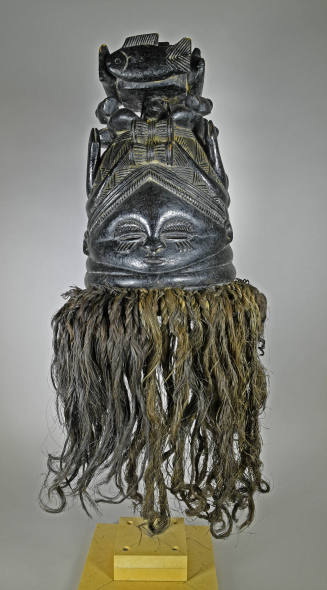
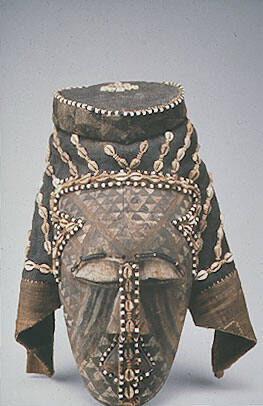
Mask with Fiber Costume, Kifwebe
Place CreatedDemocratic Republic of the Congo, Africa
CultureLuba
Datelate 19th-mid 20th Century
MediumWood, pigment, fiber
Credit LineEx coll. William S. Arnett
Dimensions57 1/4 x 14 1/2 x 9 in. (145.4 x 36.8 x 22.9 cm)
Object number1994.004.106
Label TextKifwebe literally means "chases death away." Masks are danced in pairs at the death of a chief or when someone assumes an important political title, thus marking occasions of social transition and transformation. Kifwebe masks originated with the neighboring Songye in southeastern Congo (see for example 2003.73.1), and Luba Kifwebe masks are strongly influenced by them. Associations of Luba and Hemba dancers are credited with the spread of this popular mask type. The dancer's costume is made of fibrous material and animal skins. The crest and color of this mask identify it as female. The female Kifwebe symbolizes continuity and consistency, expressed through the whiteness of the mask. Whiteness is also used as a concealment that veils the underlying magical potential of sorcery and witchcraft, which are signaled by touches of red and black. Four holes in the top of the mask may indicate the former addition of a horn, feathers, or other magical substances.
Exhibition HistoryMCCM Permanent Collection Installation, Rotation 3, September 26, 1998 - Spring 2003
ProvenanceEx coll. William S. Arnett (1939-2020), Atlanta, Georgia.
Status
Not on viewCollections
- African Art
20th Century
late 19th-late 20th Century
late 19th-early 20th Century
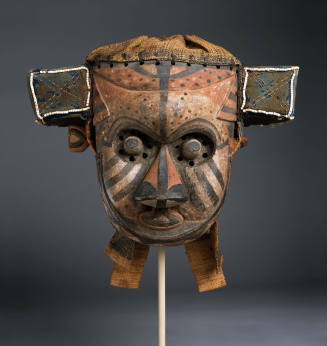
late 19th-mid 20th Century
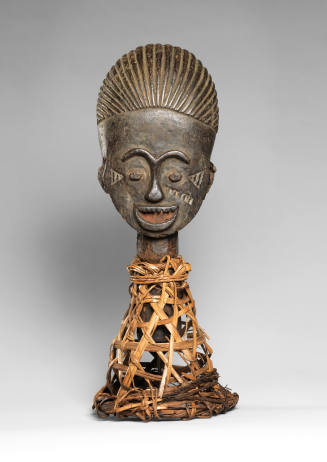
late 19th Century
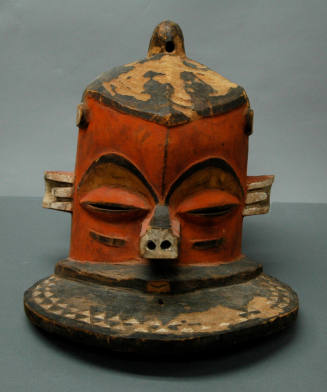
20th Century
late 19th-early 20th Century
late 19th-early 20th Century
mid 20th Century
19th Century
late 19th-early 20th Century
Parallel Number 1/Parallel Number 2