ClassificationsAncient Near Eastern Art
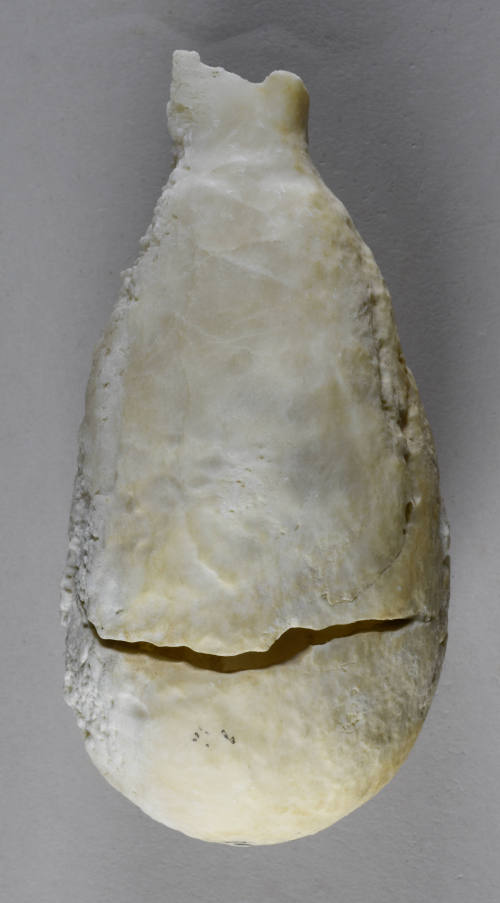
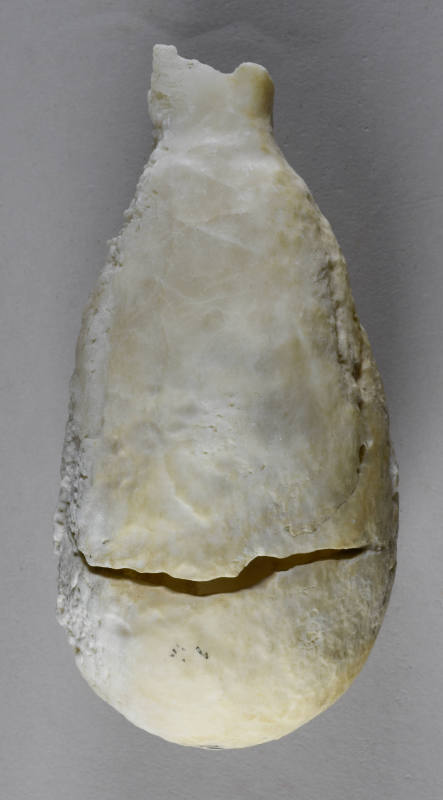
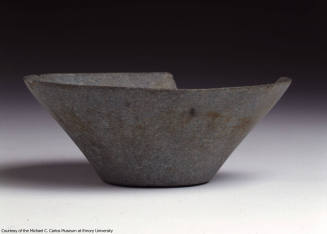
Fragmentary Vessel
Place ExcavatedJericho, Palestine, Asia
CultureCanaanite
PeriodMiddle Bronze Age II
Date1800-1600 BCE
MediumAlabaster
Credit LineJericho Excavations, 1952-1958
Dimensions5 1/16 x 2 9/16 in. (12.8 x 6.5 cm)
Object number1956.010
Label TextAlabaster vessels were first produced in Egypt as small containers for ointments, precious perfumes, and aromatic oils and were imported to the Levant as well as locally produced. At Jericho, craftsmen used a local alabaster, known as gypsum or calcium sulphate, which was probably obtained from Beisan, 70 kilometers from the site. The softness of alabaster made it easy to work. A block of stone was cut into a cylindrical shape and hollowed out with a metal chisel or drill. In some cases, the vessels were made in several pieces, with the rim and the neck worked separately and then inserted into the body. Finally, the surface was polished with a finely ground sandstone such as sandquartz.
Exhibition HistoryMCCM Permanent Collection Galleries, May 11, 1993 - Spring 2001
MCCM Permanent Collection Reinstallation, October 6, 2001 - February 12, 2018
Published ReferencesKathleen Kenyon, Excavations at Jericho II (London: British School of Archaeology in Jerusalem, 1965), 197, 301, figure 100.20.
ProvenanceExcavated by Kathleen Kenyon (1906-1978), Jericho, Palestine.
Status
Not on viewCollections
- Ancient Egyptian, Nubian, and Near Eastern Art
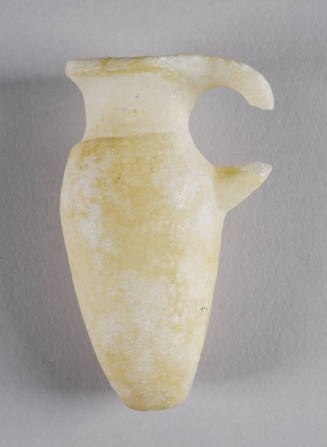
1800-1600 BCE
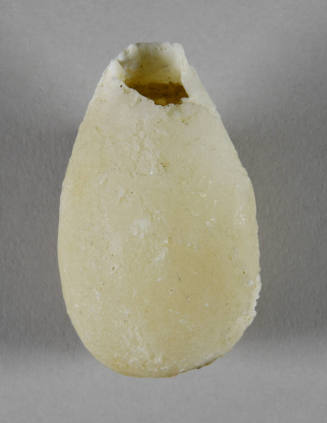
1800-1600 BCE
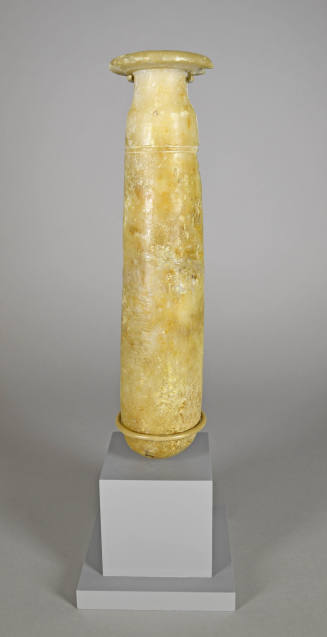
305-30 BCE
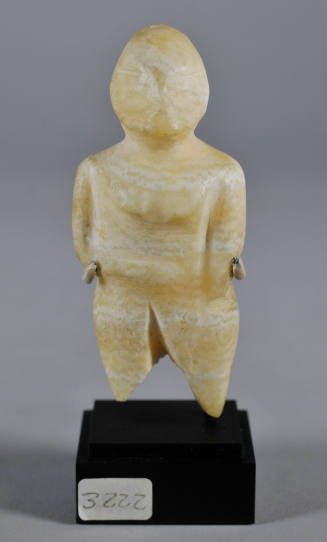
6500-6000 BCE
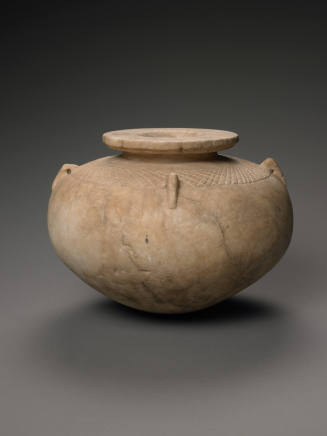
2900-2350 BCE
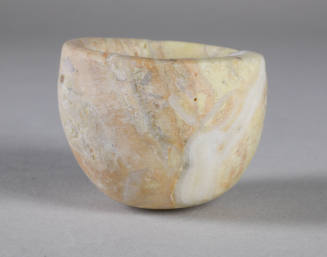
5500-4000 BCE
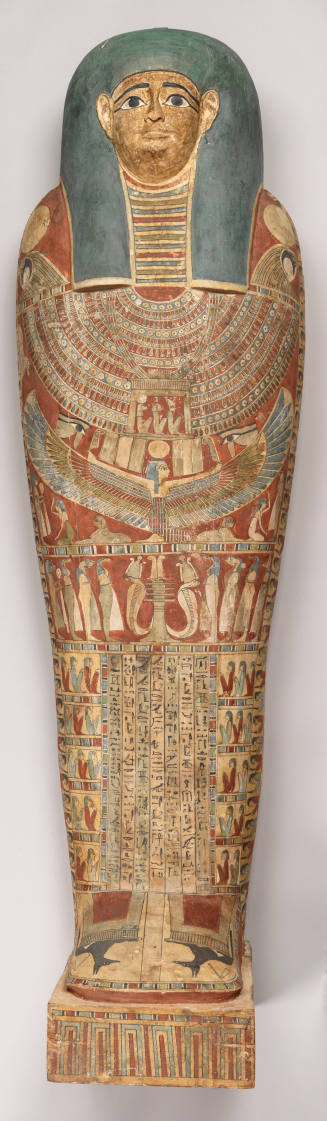
282-246 BCE
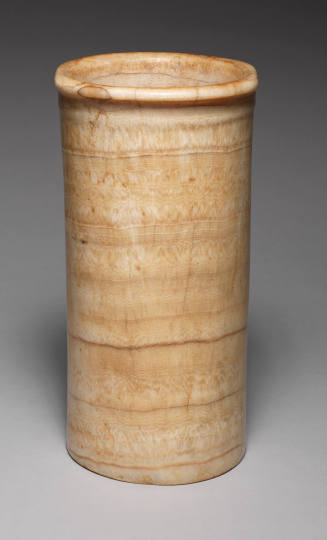
2950-2730 BCE
3rd Millennium BCE
early 1st Century CE