ClassificationsGreek and Roman Art
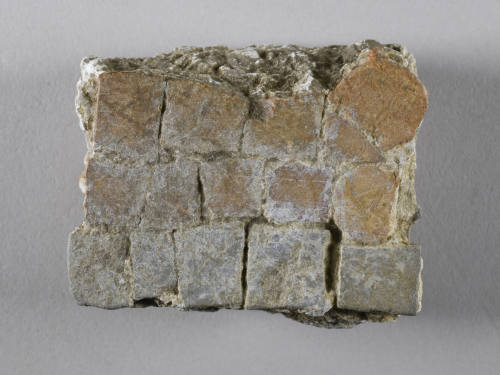
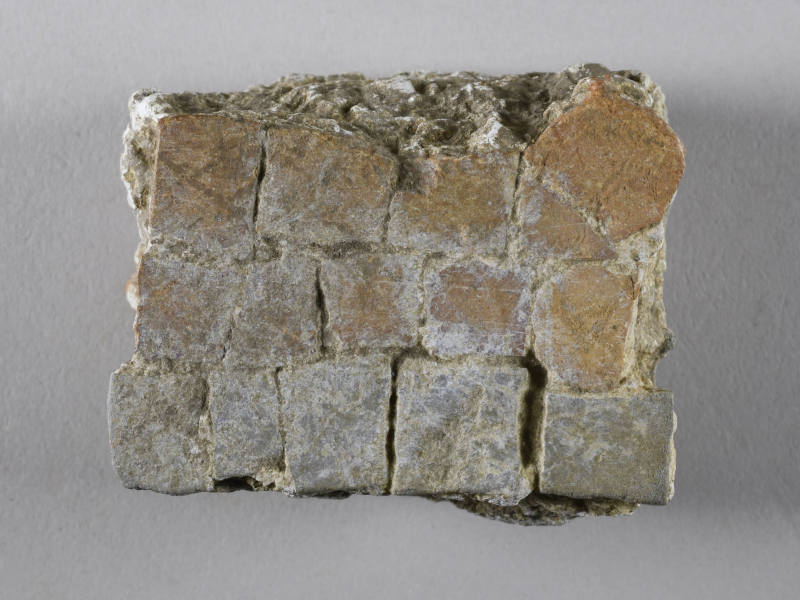
Mosaic Fragment
Place ExcavatedCaesarea, Israel, Asia
CultureRoman
Dateca. 22 BCE to 641 CE
MediumStone, plaster
Credit LineLink Marine Expedition, 1960
Dimensions2 1/4 x 1 5/8 in. (5.7 x 4.1 cm)
Object number1960.013
Label TextStrategically located along the main shipping route used by merchants sailing from Egypt to Rome, the harbor city of Caesarea on the Syro-Palestinian coast (modern Israel) was built by Herod the Great in 22 BCE on the site of a Hellenistic period anchorage known as Strato's Tower. Dedicated in 10 BCE, the city was named in honor of Hadrian's patron, the Roman emperor, Caesar Augustus, and became the captital of the Roman province of Judea, later renamed Syria Palaestina. It was the seat of Roman authority in Palestine, and was intended as a rival to Jerusalem, which was the center of Jewish resistance to Roman rule. Herod's Caesarea was built as a symbol of his largesse and his alliance with Rome, with urban architecture typical of Roman cities, including a theater, hippodrome, and temple to Augustus and Roma, the personification of the city of Rome. Excavations have revealed Pompeian style wall paintings and mosaics.Exhibition HistoryMCCM Permanent Collection Galleries, May 11, 1993 - August 1995
MCCM Permanent Collection Galleries, July 1997 - Spring 2001
ProvenanceExcavated by Link Marine Expedition, Israel, 1960.
Status
Not on viewCollections
- Greek and Roman Art
ca. 22 BCE to 641 CE
ca. 9-3 BCE
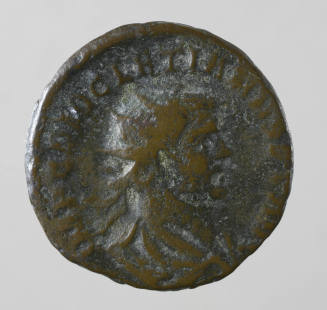
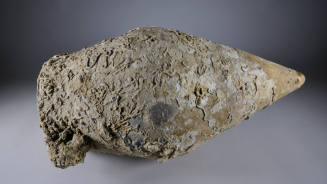
539-331 BCE
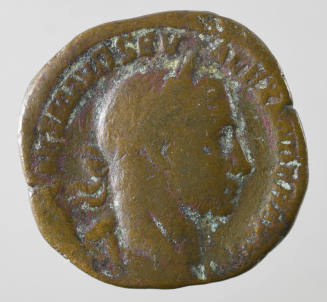
222-235 CE
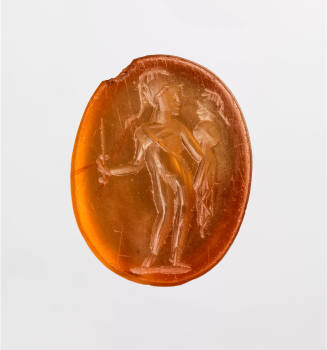
1st Century CE
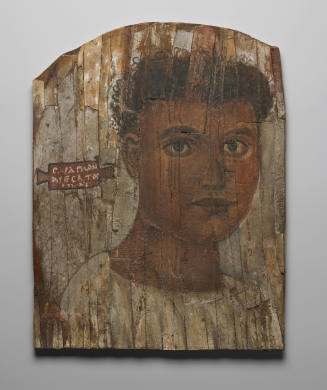
ca. 2nd Century CE
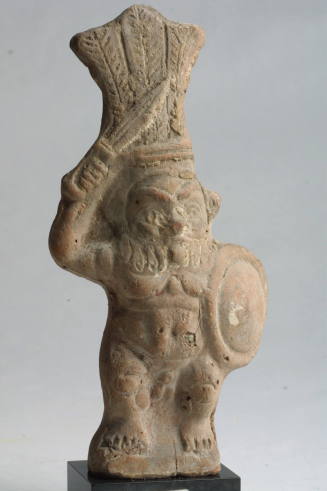
late 1st Century BCE-2nd Century CE
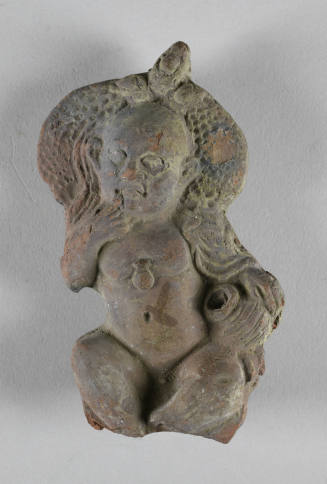
30 BCE-323 CE
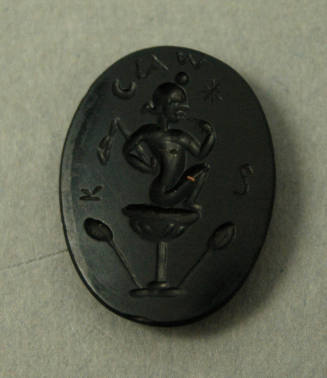
332 BCE-642 CE
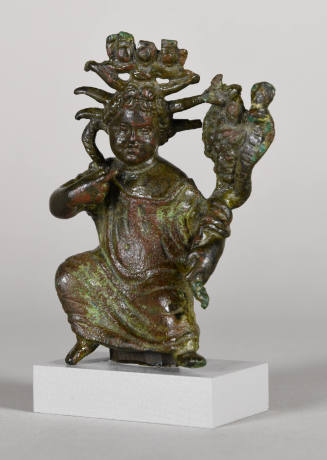
ca. 1st Century CE
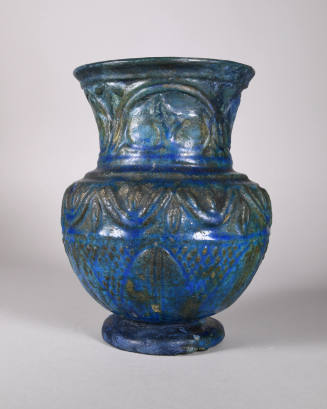
305 BCE-323 CE