ClassificationsAncient Egyptian Art
Stela
Place FoundEgypt, Africa
CultureEgyptian
PeriodNew Kingdom, Dynasty 19
Date1279-1191 BCE
MediumLimestone
Credit LineCollected by William A. Shelton, funded by John A. Manget
Dimensions3 7/16 x 7 11/16 x 1 7/16 in. (8.8 x 19.5 x 3.7 cm)
Object number1921.012
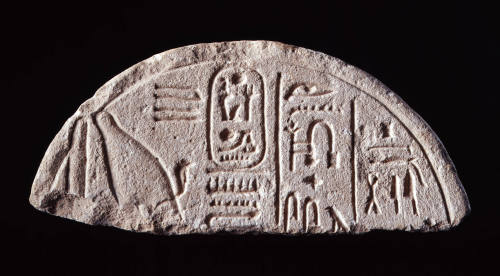
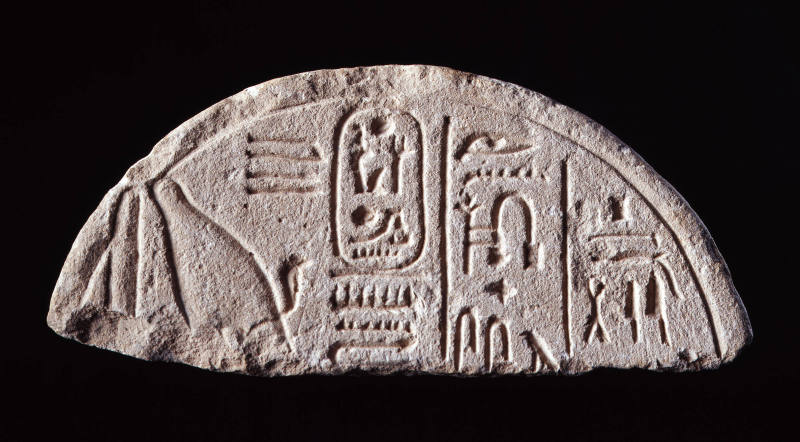
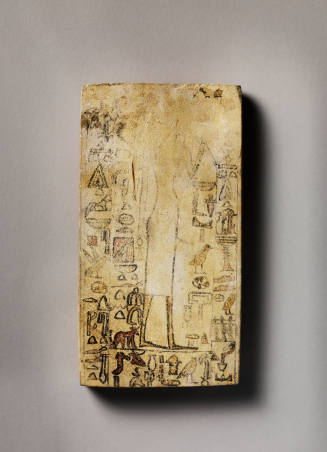
Label TextThis fragment formed the uppermost portion of a small votive stela. The top of the white crown with uraeus along with the wearer's ear and eye are visible to the far left. The name Usermaat-setepenre Montuemtawy is inscribed in front of the figure, identifying it as a deified form of Ramesses II (reigned 1279-1213 BC). The inscription continues to the right, stating that the stela was made by the scribe Paenmehit. No other figures are preserved, although Paenmehit himself most likely appeared below his name, perhaps kneeling before the king. The Ramesside and subsequent periods saw a proliferation of votive offerings in temples throughout Egypt. Wealthy individuals would commission statues inscribed with their name, titles, and filiations, to be conspicuously placed within a temple. This allowed the donor to perpetually take part in the particular cult of that temple. Those with scarce resources might erect a stela such as this one in order to receive the beneficence of the gods and the offerings of temple visitors.
Exhibition HistoryMCCM Permanent Collection Galleries, May 11, 1993 - Spring 2001
MCCM Permanent Collection Reinstallation, October 6, 2001 - March 2006
Published ReferencesPeter Lacovara and Betsy Teasley Trope, The Realm of Osiris (Atlanta: Michael C. Carlos Museum 2001), 28.
Terms
ProvenanceAcquired for Emory University Museum by William Shelton (1875-1959), ca. 1920.
Status
Not on viewCollections
- Ancient Egyptian, Nubian, and Near Eastern Art
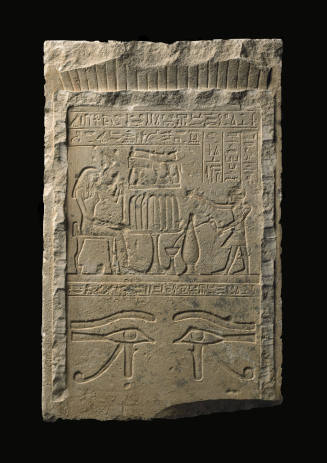
1939-1760 BCE
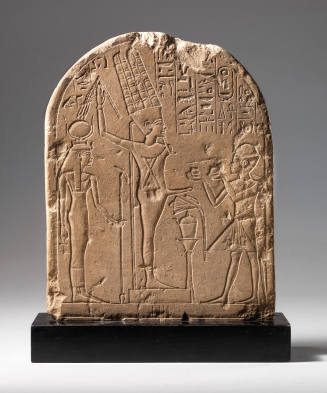
ca. 1334-1324 BCE
ca. 2118-1980 BCE
1400-1353 BCE
1400-1390 BCE
722-332 BCE
1279-1213 BCE
1539-1077 BCE
722-332 BCE
722-332 BCE
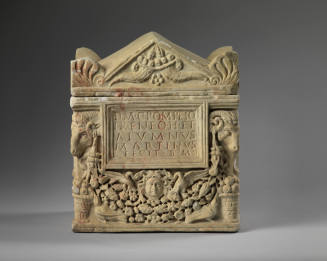
ca. 69-96 CE
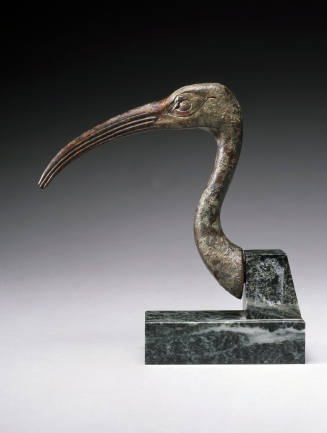
722-30 BCE