ClassificationsAncient Egyptian Art
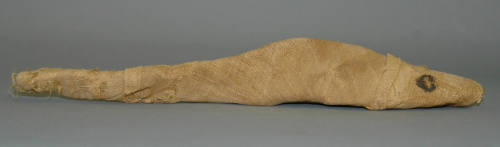
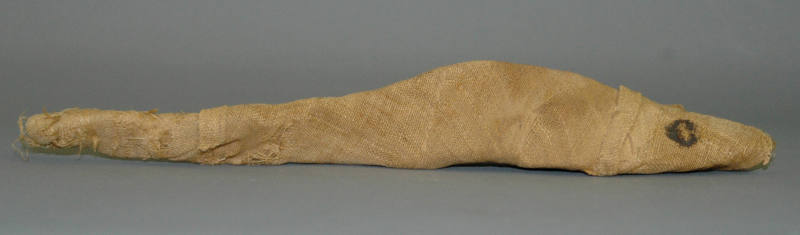
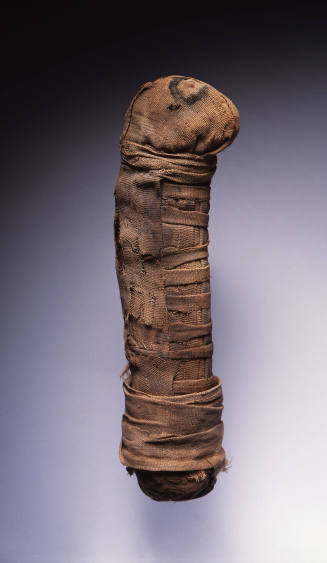
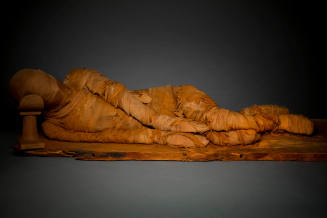
Fish Mummy
Place CreatedEgypt, Africa
CultureEgyptian
PeriodLate Period
Date722-332 BCE
Credit LineGift of Anne Cox Chambers
Dimensions11 x 2 x 2 in. (27.9 x 5.1 x 5.1 cm)
Object number2009.007.002
Label TextThere were three types of animal mummies in ancient Egypt: pets whose mummies were buried in their owner’s tombs, sacred animals mummified after their death, and votive animal mummies offered to gods at temple sites. Votive animal mummies are the most common type of animal mummy and were widespread in Egypt during the 1st Millenium BCE. Archaeologists have found mummified crocodiles, birds, cats, and, as in this example, fish. Private people would visit a temple site and purchase an animal mummy to offer to the god. After many offerings had accumulated, the temple priests would bury them at the site. The practice became so popular temples had a hard time keeping up with the demand for votive mummies, and they had to get creative. X-rays have shown many votive mummies do not have any animal remains in them. They are sometimes nothing more than plant material or wads of linen. In partnership with Emory University Hospital, the Carlos Museum was able to x-ray this fish mummy. It does contain the remains of a mummified fish, specifically a catfish.
Exhibition HistoryRecent Gifts of Anne Cox Chambers, Michael C. Carlos Museum, March 13 - 31, 2009
MCCM Permanent Collection Gallery, 2009 - March 13, 2018
MCCM Permanent Collection Gallery, July 17, 2018 - Present
Published ReferencesMCCM Newsletter, March - May 2009.
ProvenancePurchased by MCCM from Glenn Howard Ancient Art, Ltd, Westminster, Colorado.
Status
On viewCollections
- Ancient Egyptian, Nubian, and Near Eastern Art
722-332 BCE
722-30 BCE
722-30 BCE
722-332 BCE
305-30 BCE
305-30 BCE
2305-2152 BCE
722-332 BCE
664-525 BCE
664-525 BCE
664-525 BCE
664-525 BCE