ClassificationsAfrican Art
Shield
Place CreatedEthiopia, Africa
CultureOromo
Datelate 19th Century
MediumHide
Credit LineAnonymous gift
Dimensions30 in. (76.2 cm)
Object number2004.016.108
Label TextAmong pastoralist societies in present-day southern Ethiopia, men have traditionally carried a weapon in one hand and a shield in the other when they embark on extended journeys. On long journeys, shields can provide protection from rain and wind, serve as bowls for collecting water, and ward off spear attacks in close combat. In the past, warriors of the Arsi Oromo might emasculate their victims and attach their genitalia to their shields. This practice presented visual evidence of victory to their clan, provided amuletic protection, and had the potential to unnerve future enemies. Shields also signal the status of the bearer and his ethnic and age-grade affiliation to those with whom he comes into contact. In this manner, a spectator would be able to ascertain a man's position in society and his clan identity just by studying his shield.Shields of this construction were most commonly used in the nineteenth century. They were made from the thick pachyderm hide of a water buffalo, hippopotamus, or elephant. These skins were laboriously molded into a round, ribbed structure. Shields were often decorated with leather and cloth and coated with ash and fat to create a glistening watertight surface.
Exhibition HistoryMCCM Permanent Collection Installation, July 19, 2003 - March 13, 2007
ProvenanceEx private collection, United States, purchased from African dealers between 1994 and 2001.
Status
Not on viewCollections
- African Art
2nd Century CE
ca. 6th-7th Century CE
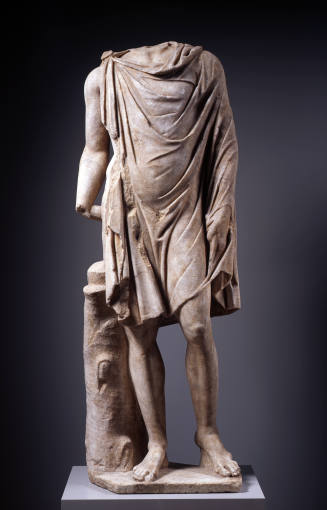
1st-2nd Century CE
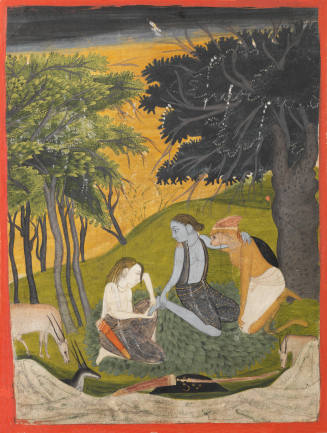
late 18th-19th Century

355-361 CE

c. 355-361 CE

355-361 CE
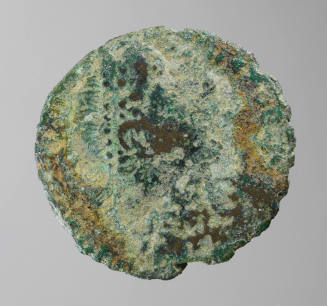
348-361 CE
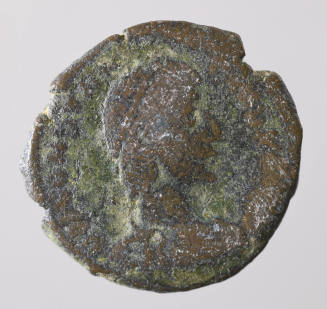
351-354 CE

c. 351-354 CE