ClassificationsWorks of Art on Paper
Artist
Jacques de Stella
(French, 1596 - 1657)
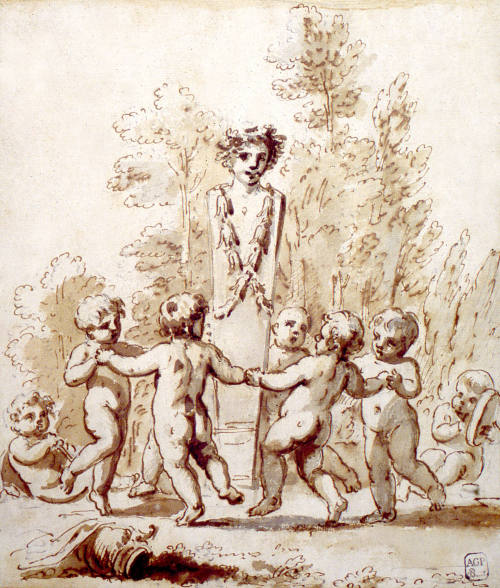
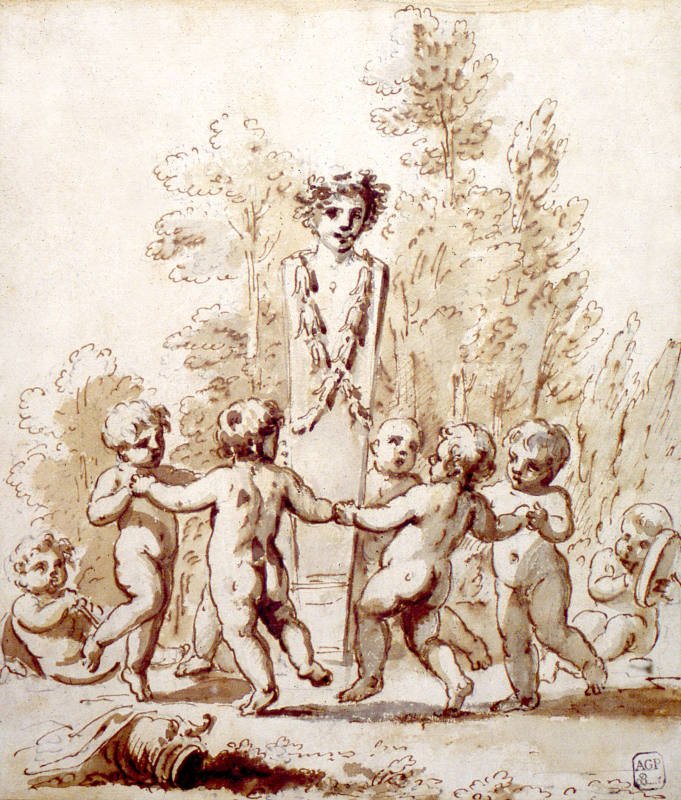
Children Dancing Around a Herm
Date17th Century
Credit LineBequest of Professor William R. Crelly
Object number2001.003.004
Label TextThis drawing is attributed to Stella, a seventeenth-century painter, engraver, and draughtsman who worked in both France and Italy. He was closely associated with Nicolas Poussin, forming a lasting friendship with the artist while in Rome (1623-34). The subject matter and composition of this drawing are comparable to Stella's designs for Les Jeux et plaisirs de l'enfance ("The Games and Pleasures of Childhood"), fifty prints which depict groups of putti, or young children, engaged in various games, including dancing in rings. Stella repeatedly returned to the motif of putti throughout his career, beginning with his studies of Hellenistic and Roman sarcophagi made during his stay in Rome. Figures of very young children were thought to evoke tenderness and empathy in the viewer, and Stella employed them to great effect.Exhibition HistoryRecent Acquisitions of Old Masters: Durer to Delacroix, Michael C. Carlos Museum, October 6, 2001 - January 28, 2002
ProvenanceEx coll. William Crelly (1924-1999), Atlanta, Georgia.
Status
Not on viewCollections
- Works of Art on Paper
ca. 585-575 BCE
1539-1292 BCE
Giovanni Battista Falda
First published 1677, MCCM edition published ca. 1688
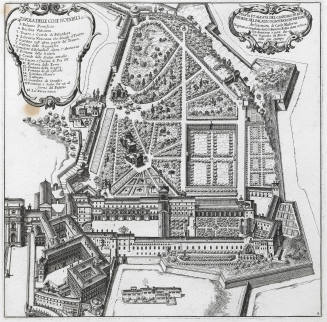
Giovanni Battista Falda
First published 1677, MCCM edition published ca. 1688
4th Century BCE