Call and Response
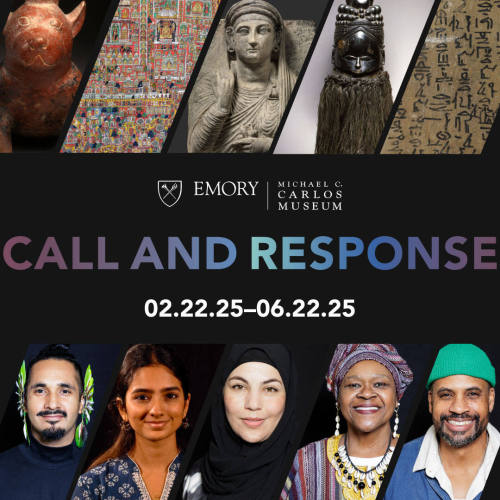
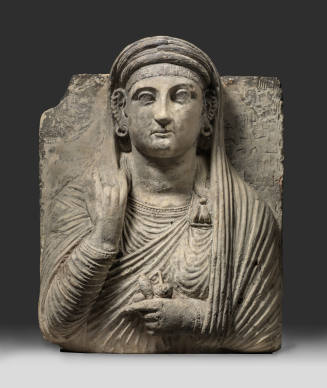
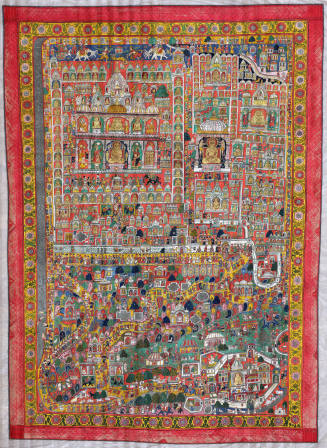
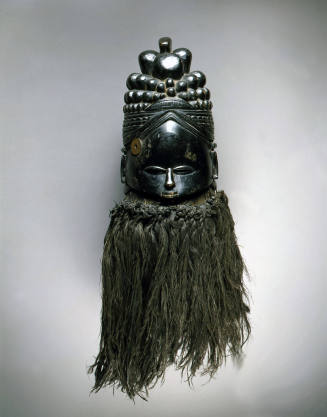
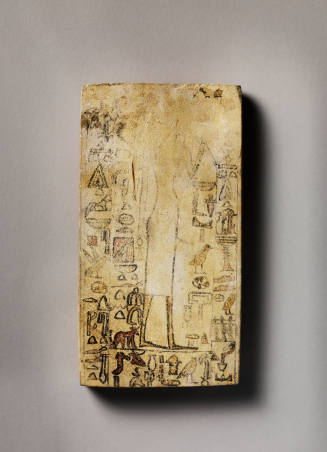
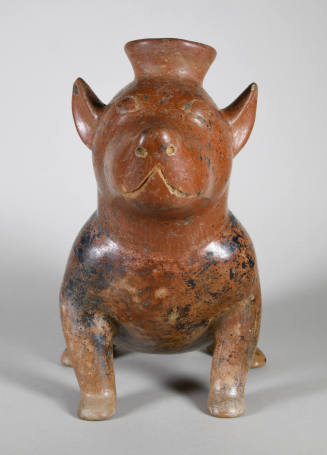
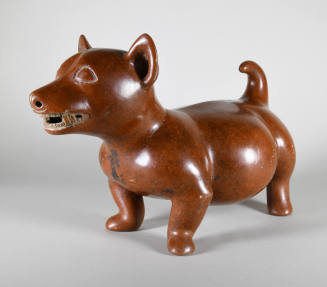
For Call and Response, a diverse curatorial team of individuals within and outside the museum collaborated with members of the community to create an experimental exhibition featuring artifacts from five distinctive cultures: a Sowe mask from the Mende culture of Sierra Leone, Colima dogs from ancient west Mexico, a funerary relief from the ancient city of Palmyra in central Syria, an 18th-century map of a sacred Jain pilgrimage site in India, and an ancient Egyptian text known as a Letter to the Dead from north Africa.
A galvanizing objective for this exhibition was to initiate creative partnerships between the museum and the communities it serves, yielding fresh insights from the lived experiences of members of these communities. They have been an invaluable resource in developing a collective consideration of how these inert objects, invested with memory and meaning, “call” through time, inspiring subsequent generations, which draw on them as sources of pride and communal affirmation —
“responding,” reimaging, and reinterpreting within a contemporary context.
A feature of the African American musical tradition, call and response is a participatory practice that engages the community in a melodic “conversation.” A musical phrase serves as a “call,” which is “answered” by a corresponding phrase — the repetitive process occurring at different intervals of the composition. This lyrical innovation, which traces its roots to Sub-Saharan Africa, serves as a creative reaffirmation of kinship and communal ties. For this exhibition, we adopted the concept of call and response as our organizing principle with which to reconsider the relationship between the museum and the communities it serves.
Call and Response has been made possible by the generous financial support of the Charles S. Ackerman Fund and the Christian Humann Foundation. A dynamic group of co-creators—community members, local organizations, visual and performing artists, Emory faculty, and museum curators—have worked to interpret five objects from the museum’s permanent collection in innovative ways that amplify the voices of the communities we serve and demonstrate the relevance of historical objects
for contemporary audiences:
Anandji Kalyaniji Trust
Emory Center for Digital Scholarship
Jain Society of Greater Atlanta
Mende people of Moyamba, Sierra Leone
Refugee Women’s Network
SCAD Digital Media Center
Special thanks to Manhar Parekh, Jainee Shah, Nilesh Shah, Madhu Sheth, Dina Warnock Thornton, Michelle C. Chatman, Gerilyn Johnson, Simone Jones Snelling, Shahed Alquaisy, Sushma Barakoti, Wadha Hussein, Awaz Jabari, Farizeh Malak, MarMar Stewart, Rawia Yassin, and Rabia Zkhria.
Limestone funerary portraits from the city of Palmyra in the Syrian desert make up an important part of Syria’s cultural heritage and remind us that ancient people put as much of an emphasis on self-representation as we do today – just in different media. In a Nix-Mann Endowed Lecture, Rubina Raja, professor of classical archaeology and art at Aarhus University, and director of the Danish National Research Foundation’s Centre of Excellence for Urban Network Evolutions, FOCUSES on Palmyrene portraits and their cultural contexts. She highlights object biographies that provide insight into the spread of these portraits across the world from the 19th century onwards and the various meanings they came to hold in different countries.